
India's leading commodity exchange, National Commodity and Derivatives Exchange (NCDEX), and private weather forecasting company Skymet took a significant step towards launching the country's first tradeable weather index on Monday (August 14) by entering into an agreement to deepen their understanding of the impact that weather has on agricultural commodities. The memorandum of understanding (MoU) between NCDEX and Skymet is a profound step in the direction of linking farmers with the weather in a scientific way, according to an official statement. Sources indicate that NCDEX and Skymet will conduct workshops and seminars across the country to educate farmers about how they can scientifically use weather forecasts to hedge risks.
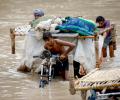
The El Nino impact on the Indian monsoon typically manifests by way of extended break in rainfall.

India's decision to ban the export of non-basmati white rice has pushed up global prices, prompting multilateral lending agencies, such as the International Monetary Fund (IMF), to call for a reconsideration of the move. Though nothing has been spelled out yet officially, sources said, the government might consider requests for government-to-government sale of non-basmati white rice, especially to West African nations where India is a major supplier. Also, traders and exporters of specialty regional rice varieties like sona masuri or gobindo bhog feel that they have been short-changed.

The Rajya Sabha on Tuesday gave its green light to the Multi-State Cooperative Societies (Amendment) Bill 2023. This Bill introduces significant amendments to the Multi-State Cooperative Societies (MSCS) Act. These modifications aim to enhance the transparency and accountability of these cooperatives' operations in a bid to improve governance.
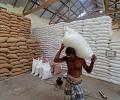
Rising prices of cereals and concerns over rice production in the 2023-2024 crop year due to insufficient rains followed by floods could be the possible causes.

Non-basmati white rice accounts for nearly 25-30 per cent of total rice exported from the country.

Usually, turmeric is grown over 290,000-330,000 hectares of land. But in 2022-2023, according to official estimates, there has been a drop of about 10,000 hectares.

Cooler weather meant that demand for milk products and value-added items like buttermilk and ice-cream did not show the usual rise.

Essel Mining & Industries Limited (EMIL), Adani Enterprises (AEL), and JSW Steel are looking to surrender their mines. Of these, AEL and EMIL have already notified the government.
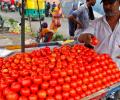
8 out of 10 households are planning to cut their tomato consumption if prices stay in the Rs 75-150 kg range over the next three months.

At a time when climate change poses significant challenges and the need for sustainable and efficient farming practices has never been more critical, unmanned aerial vehicles (UAVs) allow farmers to gain a bird's-eye view of their crops from ground level. Drones have become a new force in precision agriculture, helping increase productivity while prioritising sustainability and resilience. Fertiliser major IFFCO is exploring this very transformative power of technology in agriculture.

Jeera July futures in NCDEX touched a record high of Rs. 58,085 per quintal on Monday, before coming down to around Rs. 55,500 on Tuesday. This was due to profit booking and extension of additional surveillance margin of 2.5 per cent till July 18, including on all contracts to be launched in the future. The softening, according to some reports, is also because of fears of regulatory action on jeera traders over allegations of excessive speculation.
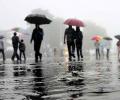
The southwest monsoon has started on a weak note and this has delayed the sowing of kharif crops. Though a cause for concern, the situation hasn't reached a stage where it warrants any panic response. Moreover, according to meteorologists and industry players, monsoon rains will witness a revival in the coming few weeks.

After a gap of more than 13 years, the National Commodity and Derivatives Exchange (NCDEX) is all set to launch a futures contract in groundnut (in shell) to fill a void in oilseeds complex futures because of a ban in several high-volume commodities.

'As long as Amul was coming in with products it was not a problem because it was something value added and with a shelf life.' 'When it gets into the local market by procuring locally, it cuts into the market-share of local cooperatives.'

States have been told to prepare in advance to counter any impact of an adverse southwest monsoon.

In a significant development, India is believed to have placed a funding request of around $55 million in its first call with the Pandemic Fund of the World Bank, sources said. The fund has been set up to finance critical investments in a bid to strengthen pandemic prevention, preparedness, and response capacities at national, regional, and global levels, with a focus on low- and middle-income countries. It was created in the aftermath of the Covid-19 global pandemic.

With different agencies showing divergent predictions regarding the southwest monsoon, the central government and states are gearing up to face adversity with various line ministries reportedly being directed to undertake mock drills and hold preparatory meetings. Around 56 per cent of the net cultivable area of the country is rain-fed, accounting for 44 per cent of foodgrain production. The June-September rains contribute around 73 per cent of the annual precipitation.
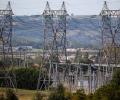
At around 3 pm on Wednesday, India's daily peak power demand touched 220 gigawatts (Gw)-the highest daily peak ever in the history of the country. The ministry of power in its estimates had projected country's power demand to cross touch 220 Gw during the months of April-June. With a cooler April due to unseasonal rains, the peak shifted to May.
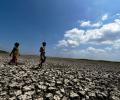
The onset of the southwest monsoon is being keenly watched this year as it may provide an early sign regarding its progress over the Indian subcontinent, particularly when El Nio is expected to rear its head during the latter half of the season.
